So anyways, this is an article that, of course, sticks out for me because I’m always kind of, like, thinking about longevity and, you know, the whole time frame of our existence in a very philosophical way, or whatever you call it. But being an artist, you know, those things I question. You know, I question a lot of things, and my own existence and time and longevity and artists gone by and my own existence in society, trying to figure out my own identity. And I’m wondering about this article and I’m thinking, you know, I get older. It seems like when my mind gets more active, I think about things more powerfully, more structured, more intelligently than I ever could have at a green age of 21 in college trying to impress instructors. So anyways, it would be interesting to develop a blog about this very thing. You know, we have artists like Picasso that started off young and going into incredible parts of his career where he had one style and he evolved into another style and he created another style, which was famous, and he ends up just basically near the ends of his life just painting roosters and chickens like chicken scratch. And did it make any sense? No, it was quite awful. Or did he return to a child, or did he just not care, or did he lose his artistic merit, or did he just not care? I think that was one of the quotes I heard Picasso say recently was that he just didn’t care. Should we care? Or, you know, I mean, if anything, I may not be becoming a better artist, but I’m just becoming more of a questioning person in life. So this article about longevity, I’d like to post this in my blog, but again maybe just intertwine it with my thoughts on being an artist, having the energy to do the artwork, having the mental energy to create. I think it would be an interesting blog, but I don’t want to quote the article per se. I’d just like to intertwine it maybe and say, you know, what does it take to be an artist? What kind of strength do you need to be an artist, physically, mentally, and emotionally?
Draft:
The Longevity of an Artist: What Does It Take to Keep Creating?
I’ve always been fascinated by longevity. Not necessarily in the sense of how long we live, but what happens to us along the way. How do we evolve? How does our thinking change? Do we become wiser, more creative, more intelligent, or simply more aware of the world around us?
As an artist, I find myself questioning these things quite often. Perhaps it’s part of being creative. You spend so much time observing, interpreting, and questioning the world that eventually you start questioning your own existence within it.
Recently, I came across an article discussing new theories about the biological causes of aging. It explored the possibility that aging isn’t simply about individual parts of the body wearing out, but that the coordination between different systems gradually becomes less efficient.
It got me thinking about something beyond the science itself.
What does it take to remain creative as we get older?
We spend so much time talking about physical longevity, maintaining muscle, keeping our bodies healthy, and preserving our energy. But what about our mental energy? What about the desire to create, the curiosity to explore something new, and the ability to continue questioning everything around us?
I sometimes think I’m more mentally active today than I was when I was 21 years old, sitting in college trying to impress my instructors and figure out what kind of artist I was supposed to become.
Back then, I was learning techniques, studying other artists, developing skills, and trying to establish my own identity. Today, I find myself questioning things in an entirely different way. I’m interested in why we create, what motivates us, how we perceive things, and what makes one person see something completely different from another.
Perhaps that’s part of growing older. You accumulate experiences, and those experiences become another set of tools for understanding the world.
But does that necessarily make you a better artist?
Consider Pablo Picasso. He was an extraordinary example of artistic evolution. He moved through different periods, explored different approaches, challenged traditional representation, and continually reinvented himself. His career was practically a lifetime of artistic experimentation.
Yet his later work raises an interesting question. Some of his paintings became increasingly loose, spontaneous, and almost childlike. Looking at certain examples, you might wonder whether he was simplifying his approach, deliberately abandoning conventional standards, or simply painting without the same concerns he had earlier in his career.
Was he returning to the freedom of a child? Was he no longer interested in impressing anyone? Had he reached a point where the rules simply didn’t matter anymore?
I don’t think there’s one answer.
But it does make me wonder how much of being an artist is about developing technical ability and how much is about eventually becoming comfortable enough to abandon it.
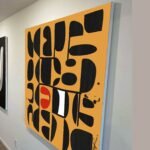
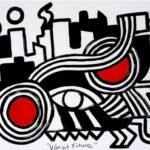
I’ve always been attracted to the freedom of painting. The ability to move beyond illustration, beyond tightly controlled detail, and into something more expressive. Sometimes the physical act of painting is just as important as the finished result.
And that requires energy.
Not just physical energy to stand in front of a canvas, stretch your arms, mix paint, and work through a composition, but mental and emotional energy as well.
You need curiosity. You need motivation. You need the willingness to experiment and occasionally fail. You need to be open to something you haven’t tried before.
And perhaps most importantly, you need to remain interested.
I think that’s something we sometimes overlook when discussing longevity. We concentrate on keeping the body functioning, but what about keeping the mind engaged? What happens when we lose our curiosity? When we stop questioning things? When we become comfortable repeating what we’ve already accomplished?
Maybe that’s a different kind of aging altogether.
I don’t necessarily believe I’m becoming a better painter with every passing year. That’s difficult to measure, and I’m not sure artistic development always follows a straight line. But I do think I’m becoming a more questioning person. I’m interested in more things, making connections between ideas, and looking at subjects from perspectives I might not have considered earlier in life.
And perhaps that influences the artwork, even when it’s not immediately visible.
After all, painting doesn’t happen in isolation. Everything we experience becomes part of our visual vocabulary. Architecture, music, travel, conversations, memories, and even the things we question about ourselves eventually find their way into our creative thinking.
So what does it take to be an artist for a lifetime?
Physical strength certainly helps. Mental engagement matters. Emotional awareness, curiosity, and the willingness to keep exploring are equally important.
Maybe longevity isn’t simply about adding more years to our lives. Maybe it’s about maintaining enough physical and mental vitality to continue participating in the things that make life interesting.
I don’t know if I’ll become a better artist ten years from now. I don’t know whether my work will evolve into something completely different or whether I’ll continue exploring some of the same ideas I’ve been working with for decades.
But I do know that I still have questions.
And as long as I have questions, I have something to explore.
Perhaps that’s the real longevity of an artist. Not necessarily how long you paint, how many paintings you produce, or how much recognition you receive, but how long you remain curious enough to keep creating.
Maybe the goal isn’t to stop aging. Maybe it’s to never stop becoming.