1. Art is free, but ownership has a price. So what is the art world anyway? I’ve studied art. I like art and history of famous painters ext . Their story . As I’ve mentioned. So people in some instances spend millions at Auction. The. We talk about brand names . And then Leila selling a banana taped to a wall. Or the bullshit of selling Payless shoes marked up. Seems like the artworks is really bs.
Response:
I think you’re getting into a really interesting subject here, and there’s a blog in it. Actually, there’s a bigger philosophical question underneath everything you’re describing:
Is the value of art in the artwork itself, or in the story, reputation, and perception surrounding it?
Let’s look at the contradictions.
1. Art is free, but ownership has a price.
Anyone can look at art. You can walk through a museum and stand in front of a Picasso, a Van Gogh, or a Monet. You don’t have to own it to appreciate it.
But ownership is an entirely different proposition.
People pay millions at auction, sometimes for paintings that are already part of art history. They’re not simply purchasing paint on canvas. They’re purchasing provenance, rarity, historical significance, reputation, and sometimes an investment.
The artwork becomes an asset.
2. Then there’s the business of branding.
Think about the names associated with art history.
Picasso, Warhol, Rothko, Basquiat.
Their names carry enormous recognition and cultural significance. Their work has become part of a larger story.
But here’s where it gets interesting.
How much of the price is the physical artwork, and how much is the name attached to it?
We see the same thing in fashion, automobiles, watches, and virtually every luxury industry.
A name can become an enormously valuable commodity.
3. Then we have the banana taped to a wall.
Comedian by Maurizio Cattelan.
A banana duct-taped to a wall.
One version famously sold for $120,000 in 2019. Another edition sold for $6.2 million at Sotheby’s in 2024.
And what exactly did the buyer receive?
Not a permanent banana. The banana is replaceable. The artwork is essentially the concept, certificate, and instructions for recreating the installation.
That’s where the discussion gets interesting.
Is it art? Is it conceptual expression? Is it a commentary on the art market itself?
Or is it simply an extraordinary demonstration of how perception creates value?
4. And then there’s the business of artificially creating value.
Your Payless example gets at something important.
In 2018, Payless staged a publicity experiment called Palessi, presenting inexpensive shoes in a fake luxury boutique. Some shoppers willingly paid hundreds of dollars for shoes that ordinarily cost much less.
The shoes hadn’t changed.
The presentation had.
The environment, branding, and perceived exclusivity changed people’s willingness to pay.
That’s a fascinating experiment in human psychology.
5. So what is the art world anyway?
I think there are several different things happening simultaneously:
- Art as creative expression.
- Art as cultural and historical significance.
- Art as a luxury commodity.
- Art as investment.
- Art as branding and perception.
- Art as a business.
And sometimes those things overlap. Sometimes they have very little to do with one another.
But here’s something I want to bring into your discussion.
Just because something sells for millions doesn’t necessarily make it better art. And just because something sells for $350 doesn’t make it less meaningful.
Price and artistic merit aren’t interchangeable.
You can spend an afternoon looking at a painting in a museum and experience something profound. You can also walk past a multimillion-dollar artwork and feel absolutely nothing.
Neither reaction is wrong.
Here’s where I think your own experience becomes relevant.
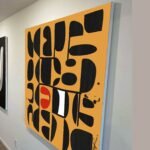
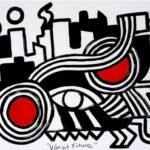
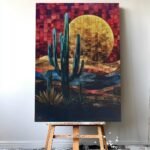
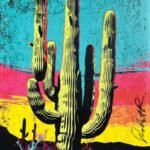
You’ve created hundreds of paintings over the years. You’ve studied art history, experimented with different styles, and developed your own visual language.
You’ve also experienced the business side: selling through Saatchi, selling directly, establishing prices, and trying to understand what makes someone purchase an original painting.
You’ve seen both sides of the equation.
And I think there’s a particularly interesting question for your blog:
“Art Is Free, But Ownership Has a Price: What Is the Art World Anyway?”
I’d explore one central idea:
Are we buying the artwork, the artist, the story, the reputation, or simply the perception of value?
And perhaps the most provocative question of all:
If the same painting were presented under two different names, with two different price tags, would people see it differently?
That’s not necessarily a criticism of the art world. It’s a question about human perception.
And it connects directly to something you’ve been exploring in your own writing: the difference between what something is and what we believe it to be.
Conclusion: the title of this blog !
😂 I love it. It’s provocative, a little sarcastic, and immediately makes people curious.
I’d keep your wording, with just a slight punctuation adjustment:
Art Is Free. Who Wants to Buy a Banana Taped to a Wall?
It accomplishes several things:
- Challenges the conventional art world.
- Introduces the question of perception and value.
- Creates curiosity without explaining the punchline.
- Gives you room to discuss Picasso, Warhol, auctions, branding, and the business of art.
And there’s a wonderful underlying contradiction:
Art is free to experience. But apparently, it can cost millions to own a banana.
That’s a pretty good place to start.