Sometimes I wonder how artists make sense of everything going on around them.
Ideas come from everywhere. One thought leads to another, and before you know it, you’re heading in a completely different direction than where you started.
You might have an idea for a painting, but that doesn’t necessarily mean you know what the finished piece will look like. Sometimes you just have to start somewhere and see what happens.
The same thing happens when working with paint. You start mixing colors, combining one with another, thinking you’ve found something interesting. Then suddenly it’s muddy, or the colors aren’t working together the way you imagined.
So you try something else.
There’s a technical side to painting, of course. Understanding color relationships, complementary colors, contrasts, balance, and composition all play a part. Purple against yellow, orange against blue. Certain combinations naturally create energy and excitement.
But knowing the rules and knowing when to use them are two different things. Sometimes I have to put my technical reasoning into play rather than simply going with what I feel. Other times, I have to trust my instincts and stop overthinking everything.
And then there’s the question of mistakes. Is it a mistake? Is it right? Or do the mistakes actually make it? Does everything, including the mistakes, become part of what makes the finished painting work?
I suppose I’ve always been analytical. I remember writing a college paper about David Hockney, an artist whose work sometimes had such a rudimentary, almost childlike quality. It was fascinating to see how an accomplished adult could approach creativity with that kind of uninhibited freedom.
After I turned in my paper, my professor told me it was one of the most analytical papers he’d ever read.
I remember thinking, wow, he actually sees something in the way I think!
That comment stayed with me for weeks. It wasn’t just a compliment about a paper. It was the feeling of having someone recognize something in you that perhaps you hadn’t fully recognized yourself. Sometimes that’s all it takes to change how you look at things.
Maybe that’s another part of making sense of the nonsense.
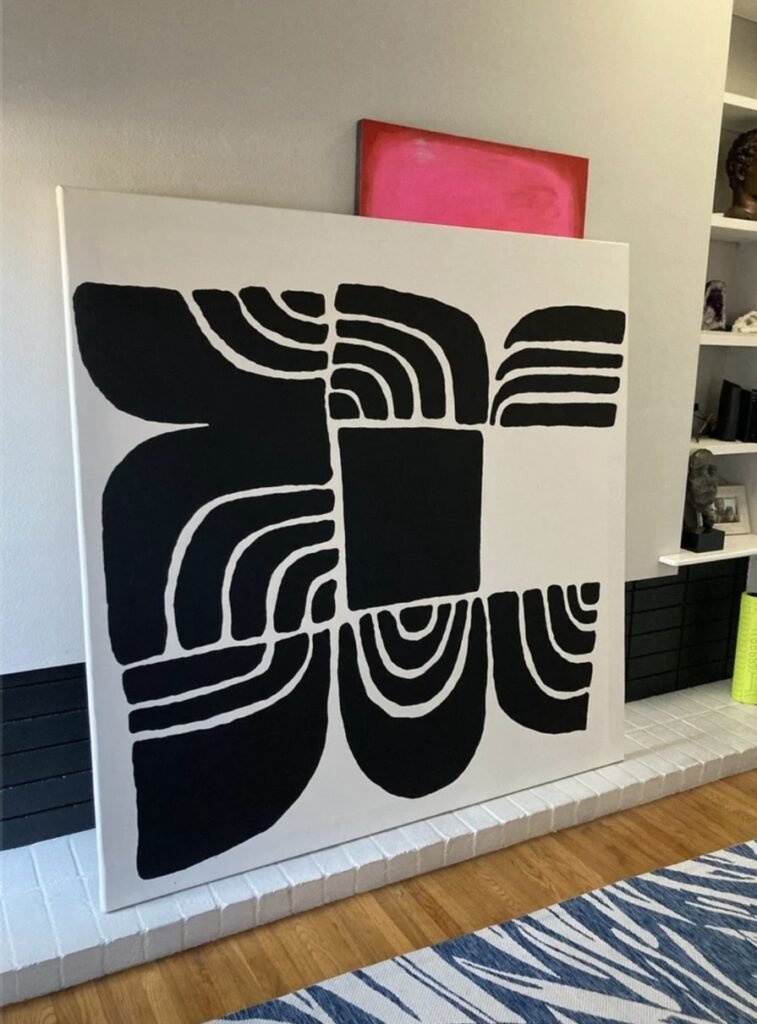
We’re constantly collecting ideas, experimenting, questioning ourselves, making mistakes, and occasionally discovering something we didn’t know we were looking for.
Sometimes technical knowledge gives us direction. Sometimes intuition takes over. And sometimes the mistakes turn out to be the very things that make everything come together.
In Conclusion
Sometimes you have to trust your instincts, but you also have to recognize when your technical knowledge needs to come into play. There’s a balance between the two.
And then there’s the possibility that what you initially considered a mistake actually becomes the best part of the painting.
I suppose that’s part of the process, too.
I’ve always been analytical. Sometimes, though, you have to stop analyzing everything and just let things happen.
Maybe making sense of the nonsense is really about knowing when to think, when to experiment, when to trust what you know, and when to simply go with it.
After all, sometimes the things that don’t make sense at first are exactly what make everything come together.